Yuvraj backs more ODI chances for Jaiswal before the World Cup
India's 2011 World Cup hero says the young opener has earned a longer run in the fifty-over side and that limited game time could leave him exposed if injuries force a call-up mid-tournament.
Published July 21, 2026 · By Fantasy Cricket Prime Newsroom
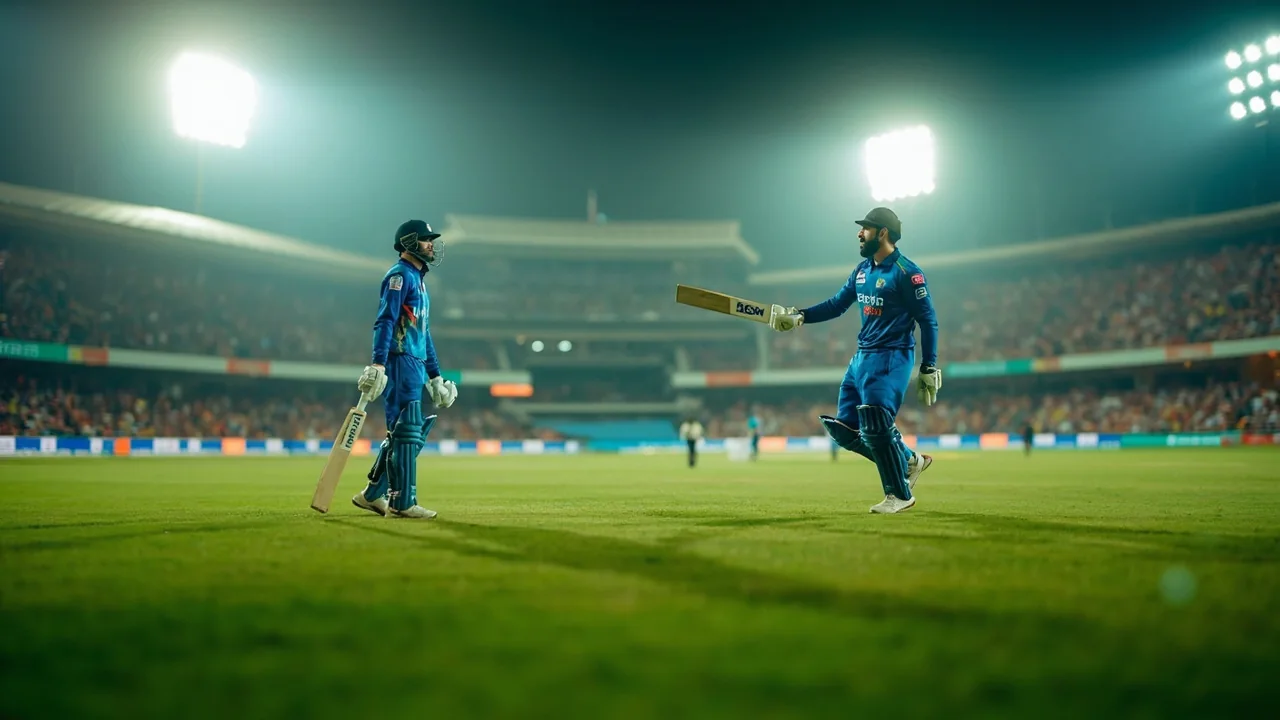
New Delhi: Yuvraj Singh has called on India's team management to give Yashasvi Jaiswal a more sustained run in the ODI side before the next World Cup, arguing that two hundreds in the last four games is too strong a return to be left sitting in the dugout when the tournament approaches.
Speaking to JioStar in the wake of India's ODI series against England, the former India all-rounder framed Jaiswal's situation as a planning question rather than a talent question. The young left-hander, he said, has done enough to be picked, but not enough yet to be trusted in the pressure of a World Cup if he is parachuted in cold.
The warning from the 2019 cycle
Yuvraj's reference point was his own experience ahead of the 2019 World Cup. He recalled how a late injury had forced India to blood two young players into the squad without enough preparation, and how that experience had shaped the conversation around youth ever since.
"More than Virat and Rohit, my concern is that Yashasvi Jaiswal, who has scored two hundreds in the last four games, is not starting," Yuvraj said. "If the World Cup comes and he hasn't had enough game time, he's suddenly going to feel the pressure. Somewhere down the line, he needs more game time before the World Cup if he is in the plans."
The remark lands at a delicate moment. India's senior core is in transition, the ODI calendar between now and the World Cup is short, and every bilateral series has become a try-out for places that may not exist once the squad is announced. Jaiswal's red-ball form and his cameos in the few ODIs he has played have both argued for inclusion; what he has not had, until recently, is continuity.
A selection logic that the numbers already support
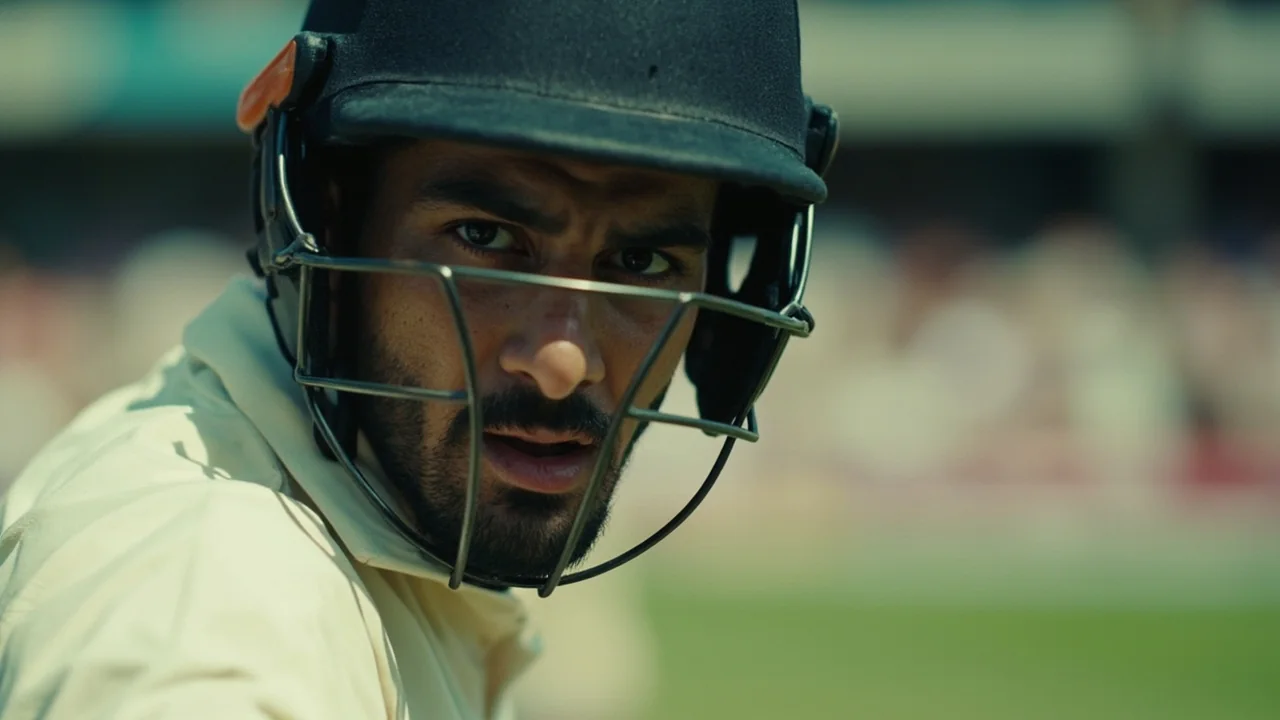
Yuvraj was careful to separate the issue from any debate over the futures of Virat Kohli and Rohit Sharma. His argument was narrower: that whoever is in the XI, the squad should be picked on form and then hardened by repetition, not picked on reputation and eased in mid-tournament.
"From a player's point of view, it hurts when you're not there. From another perspective, you can understand that maybe they wanted younger players. At that time, there were Dhoni and I, both 36 or 37, going into the World Cup, and the team management had to make a decision," he said, recalling the squeeze that pushed him out of the 2019 frame.
For Jaiswal the parallel is imperfect but instructive. The left-hander is not a sentimental pick. He has averaged above fifty in his limited ODI appearances and has converted starts into hundreds at a rate that puts him ahead of most of the openers India has auditioned since the last World Cup. What the numbers do not show, and what Yuvraj was reaching for, is the match-hardness that only repeated selection can buy.
Why one series of starts can still feel thin
India's ODI schedule before the World Cup is tighter than the Test schedule and softer than the T20 calendar. The bilateral series against England has just concluded; the next block of fifty-over games is concentrated in a handful of windows, with the Asia Cup and an away tour bracketing the final phase. In that arithmetic, two or three missed opportunities to play Jaiswal are not easy to make up.
Yuvraj's concern is not that Jaiswal will fail. It is that he will be asked to succeed in conditions he has barely experienced at this level. "If someone gets injured, then what do you do? We've seen that happen before. In the 2019 World Cup, an injury meant two young players came in without enough experience. You don't want to make the same mistakes of the past," he said.
For a squad carrying six or seven players into their thirties, the contingency case is not abstract. India's bench has been tested more in this cycle than in any since 2019, and the bench has often looked thinner than the eleven.
What the management has actually said
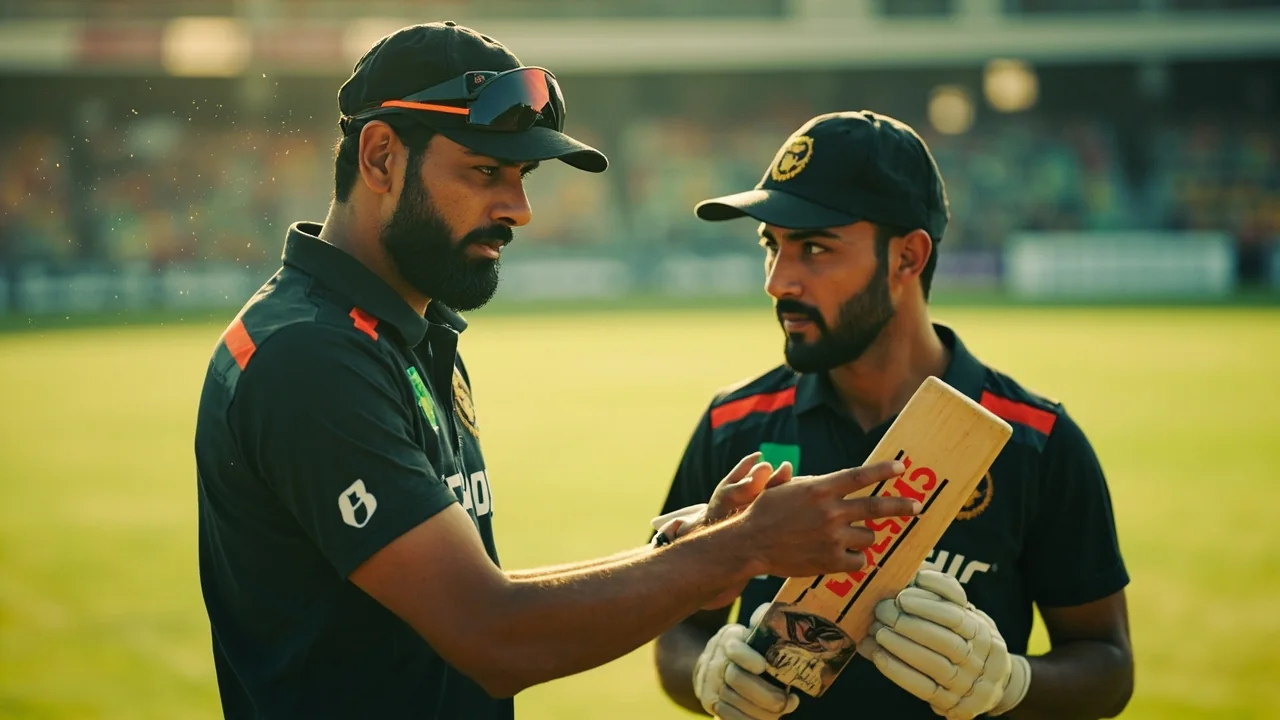
The selection conversation around Jaiswal has been run, until now, as a question of combinations rather than form. The team management has spoken about building two opening pairs to cover different conditions, and about the value of a left-right combination at the top of the order. Yuvraj's intervention does not contradict that framing so much as add a deadline to it.
The most recent ODI squads have carried Rohit and Shubman Gill as the first-choice pair, with Jaiswal rotating in when the schedule allowed. His two hundreds came in games where he was given the new ball and a full powerplay; his quietest scores came in games where India chased without needing an early accelerator. Neither pattern tells the selectors anything they did not already suspect.
Yuvraj's argument is that the time to find out whether Jaiswal can absorb the pressure of a World Cup chase is the Asia Cup, not a group game in October. By the time the team sheet is printed in ink, the answer should already be in the bank.
A wider conversation about youth and patience
The Jaiswal discussion has bled into a broader debate about how India handles the gap between domestic promise and international certainty. Yuvraj's career is a useful counter-example: he was given a long run in the ODI side before the 2011 World Cup, played through ordinary phases, and arrived at the tournament with both form and trust in the bank. The current structure, with shorter camps and shorter windows, leaves less room for that kind of runway.
Selectors have answered that pressure by holding larger pools and rotating more freely. The cost is that no individual player, Jaiswal included, can settle into the rhythm of the side. The benefit is that India can turn up to a World Cup with a squad that has covered more bases than any in its history.
Yuvraj is not asking the management to abandon that approach. He is asking them to be specific about when, in the remaining calendar, Jaiswal stops being a rotation option and starts being a first-choice opener.
What to watch between now and the squad announcement
Three fixtures will tell us most of what we need to know. The Asia Cup group stage will reveal whether the management is willing to open with Jaiswal against pace-heavy attacks on flatter pitches. The away bilateral that follows will test him on surfaces where the ball does more early. And the final pre-World Cup camp will show whether the staff have decided he is a starter or a reserve.
For readers tracking India's World Cup build-up across the news desk, the Jaiswal question is the cleanest indicator of which way the selectors are leaning: more continuity, or more rotation. Both have worked in the past. Only one of them fits a player with two hundreds and no settled role.
Yuvraj, for the record, has made his preference plain. The next move belongs to the dressing room.
The other thread: clarity for the seniors, too
Yuvraj's framing of Jaiswal's situation is consistent with how he has read the wider ODI squad over the past few weeks. His argument is not that the seniors should be dropped. It is that everyone in the squad, junior or senior, should know the role they have been picked for before the tournament begins. A player who is told he is a reserve the night before the squad flies out is a player who has effectively been told to make his own preparations, on his own, under the eye of a public that is paying close attention.
That argument lands harder on the younger players in the squad, because they are the ones who have the fewest settled habits to fall back on when the brief is vague. Jaiswal's case is unusual only because he has the recent numbers to argue for a different brief. Most reserves in a World Cup squad do not.
How a Jaiswal call-up would actually look on the morning of a knockout
It is worth being specific about the contingency Yuvraj is warning against. If a senior opener pulls a hamstring on the eve of a World Cup semi-final, the replacement is not parachuted into a relaxed net session. He is dropped into a team meeting, a bus to the ground, a warm-up in unfamiliar conditions, and a chase that may already be live by the time he walks out.
India's 2019 experience, which Yuvraj returned to in the same interview, was exactly that. The replacements were not bad players. They were players who had never been asked to absorb that level of pressure on that stage without warning. The lesson the management took, publicly, was to expand the squad and to give reserves full training access. The lesson that has been harder to apply, and that Yuvraj is now pointing at again, is that even access is not the same as game time, and game time in bilateral cricket is not the same as game time in a knockout.
Jaiswal's two hundreds came in games India was winning comfortably. That is the right kind of innings to start a career, but it is not the innings that tells a captain whether a player can be sent out at the fall of the second wicket with ten an over required. The selectors will need to manufacture that test, or accept that they have not run it.
A reading note for the weeks ahead
The fairest way to read the selectors' intent over the coming weeks is to watch the toss. Teams that have already settled on their opening pair tend to bat first in conditions where the ball does something early, because they trust their top three to absorb the movement. Teams still auditioning for the role tend to chase, because chasing lets them protect their preferred bowlers and their preferred middle order.
If Jaiswal starts the next ODI and India bats first, the message is that the audition is over. If he starts and India chases, the message is more ambiguous and depends entirely on the target. If he does not start at all, the conversation Yuvraj has reopened will not go away, because the same question will still be waiting at the Asia Cup.
Until then, the strongest signal available is the one Yuvraj has already given: a player with two hundreds in his last four ODIs should not have to ask for a fifth.