What the May 2026 SRH vs RR Eliminator preview still teaches about knockout fantasy reading
Looking back at the May 26, 2026 preview of the SRH vs RR Eliminator at Mullanpur: predicted XIs, venue scoring rates, injury notes and the fantasy lessons that still hold for knockout reading.
Published August 2, 2026 · Retrospective on a May 26, 2026 preview · By Fantasy Cricket Prime Newsroom · Source: Yahoo Sports / The Sporting News
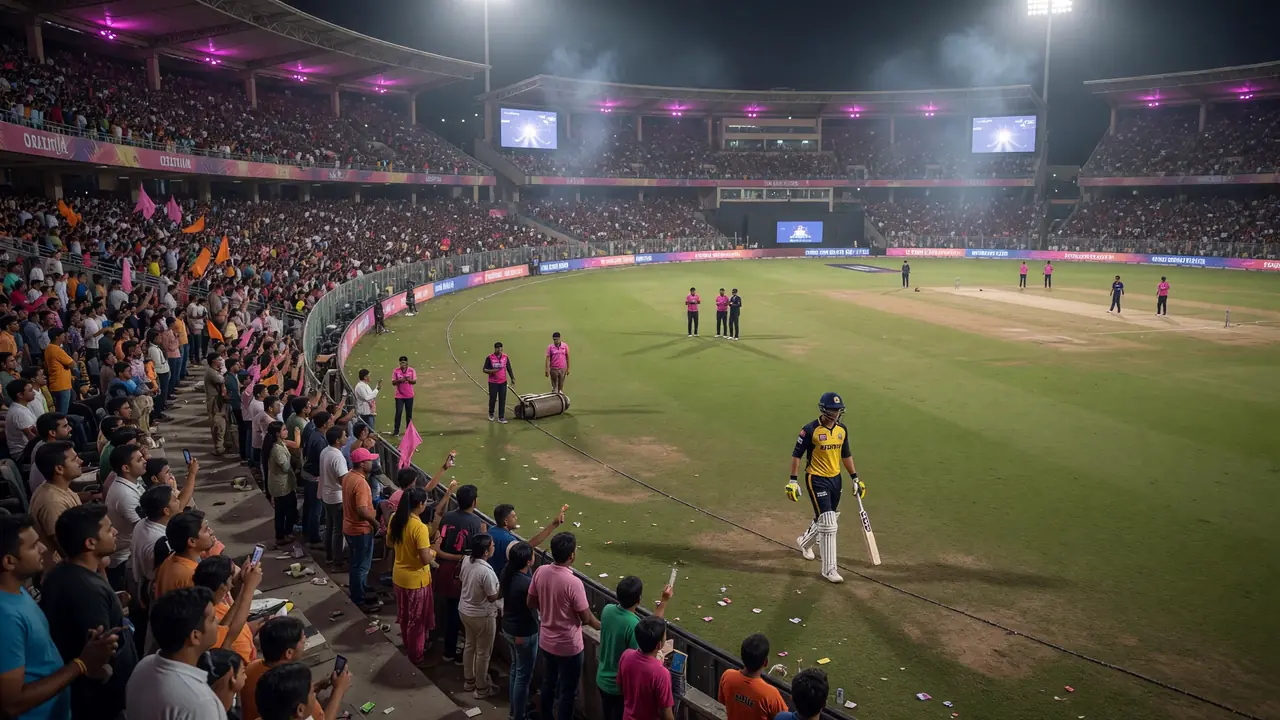
On 26 May 2026, a day before the IPL Eliminator, The Sporting News published a match preview that treated Sunrisers Hyderabad against Rajasthan Royals as a finished tactical problem rather than a hype note. The fixture was locked for Maharaja Yadavindra Singh PCA Stadium in Mullanpur, New Chandigarh, with a 7:30 PM IST start on Wednesday, 27 May, and live rights listed on JioHotstar and Star Sports Network. Months later, the piece remains a clean case study in how knockout fantasy sides should be built: start with venue math, then predicted XIs, then the injury footnotes that change captain pricing.
This retrospective stays inside that verified record. It does not invent a final scoreline or claim later team news the May preview never carried. The value is in the method the preview used, and in how that method still maps onto fantasy cricket course material when an Eliminator, Qualifier or final compresses the usual weekly margins into a single night.
Why the Eliminator frame mattered more than ordinary league nights
League matches forgive a slow start. An Eliminator does not. The preview made that structural point early: the winner would meet the loser of Qualifier 1 on the road toward the final in Ahmedabad. That single sentence changed how fantasy managers should have weighted upside. A player with a modest season average but a clear role in a must-win XI becomes more valuable than a higher-priced name whose minutes are uncertain. The May 26 brief treated both benches as nearly settled, which is exactly the condition fantasy readers need before they lock a differential.
SRH entered the night with a 2–0 ledger against RR in IPL 2026. One win came by 57 runs in Hyderabad. The other came by five wickets in Jaipur. The preview used those results not as colour, but as a form argument, and then picked SRH to advance. Match odds published through Dafabet sat at 1.79 for SRH and 2.04 for RR, close enough that a single early wicket cluster could still move live fantasy ownership. For course work, that is the right tension to teach: season form can lean one way while market pricing still leaves room for the underdog openers.
Mullanpur’s scoring board before a ball was bowled
Venue tables are often skimmed. This one should not have been. The preview listed an average first-innings score of 181.00 at the PCA Stadium and an average scoring rate of 9.31 runs an over. The season’s highest team total at the ground was 254 for 7 by Punjab Kings against Lucknow Super Giants on 19 April 2026. The highest successful chase was 223 for 4 by Punjab Kings against Sunrisers Hyderabad on 11 April 2026. Those four numbers already outline a fantasy environment: topside totals, short boundaries for clean strikers, and chase packages that remain live deep into the second innings.
A 181 first-innings mean is not a licence to stack only hitters. It is a licence to demand bowling returns that survive high scoring. At 9.31 an over, a death bowler who concedes eight an over is quietly winning his matchup, while a spinner who goes at ten needs wickets to justify the same salary. Knockout reading starts there. Before names are ranked, the ground tells you whether the night will pay top-order ceiling, bowling economy, or both.
The successful chase mark of 223 also mattered for second-innings captain theory. If a side was hunting around 180 to 200, the chase was historically live at Mullanpur. That supported keeping premium openers in both projected first-innings and chase builds rather than splitting the pool too aggressively by toss guesswork. Fantasy courses that still teach binary “bat first only” logic fail this test. The May venue table argued for flexible captain tiers anchored to role, not only to the coin.
The opening pairs the preview refused to treat as ordinary
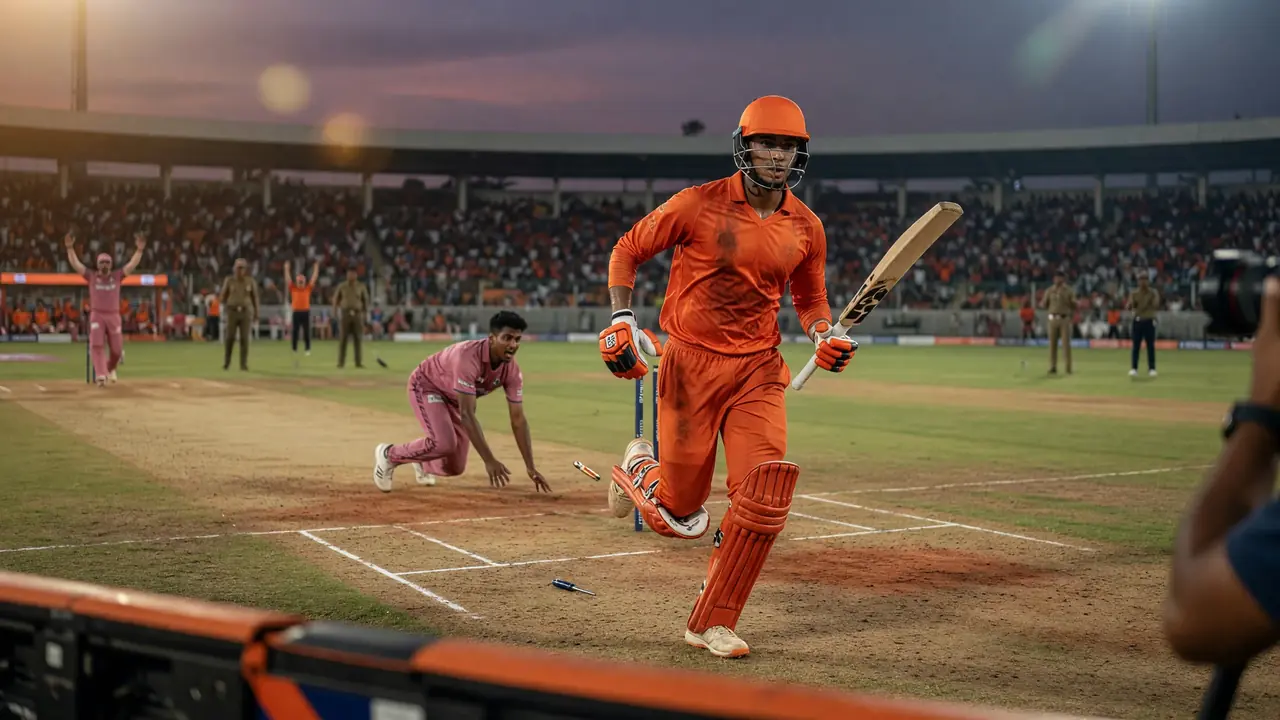
Rajasthan Royals were projected to open with Yashasvi Jaiswal and Vaibhav Sooryavanshi. The preview called that pair the tournament’s most explosive opening combination and underlined that the Eliminator would be Sooryavanshi’s first appearance in the knockout round. For fantasy construction, a first Eliminator is not automatically a fade. It is a volatility flag. Ownership often underweights a young opener on a big night even when the role is locked. When the role is opening against a high-scoring venue average, that underweight becomes the differential lane.
Sunrisers Hyderabad’s projected top order ran Abhishek Sharma, Travis Head and Ishan Kishan with the gloves. The preview described SRH’s top three, led by Head and Abhishek, as the most destructive unit in the competition. Heinrich Klaasen sat in the middle, Nitish Kumar Reddy offered the seam-bowling all-round bridge, and Pat Cummins captained. That shape is a classic high-ceiling fantasy core: two left-field power options at the top, a wicketkeeper who can bat through, and a captain-bowler whose overs are never optional in a knockout.
Head-to-head history reinforced the batting bias toward SRH. Across 23 meetings the preview’s table had Sunrisers ahead 14–9, and the copy stated that SRH had won each of the previous five contests against RR. Head-to-head streaks are weaker predictors than current roles, but in an Eliminator they still influence public ownership. When the public leans hard into the streak side, the opposite opening pair can become the higher-leverage sparse ownership route if the venue still favours ball-striking. Jaiswal and Sooryavanshi fitted that counter exactly.
Injury footnotes that should have moved the salary sheet
The preview’s injury paragraph was short and decisive. Rajasthan captain Riyan Parag was managing a hamstring issue. Ravindra Jadeja was also nursing an injury. Both were still expected to play. Sunrisers were described as fully fit, with Harshal Patel the likely Impact Player. In fantasy terms, “expected to play” is not the same as “full bowling load” or “trusted finishing role.” A hamstring-managed captain can retain his batting slot while quietly losing an over or a long chase gear. Jadeja’s dual-threat value is especially sensitive to that kind of management because half his fantasy case is bowling overs that can disappear late in a team meeting.
That is why knockout courses should teach a two-column checklist. Column one: is the player in the XI? Column two: is the player’s full role intact? Parag cleared column one in the May preview. Column two stayed provisional. Harshal Patel, by contrast, had a clean Impact lane on a fully fit SRH bench, which is often the quieter path to bowling points when death overs open up after an early top-order burst.
Dhruv Jurel was listed as the Royals wicketkeeper in the predicted XI, with Parag captaining. Keeper pricing in high-scoring knockouts tends to track batting position more than pure glove work. If Jurel was set to bat inside the top six, he belonged in the same conversation as Kishan rather than as a pure late filler. The preview did not invent a deeper batting order beyond those named roles, so the disciplined reading stopped at what was printed: Jurel with the gloves, Parag with the armband, Jaiswal and Sooryavanshi at the top.
How the predicted XIs translate into a course worksheet
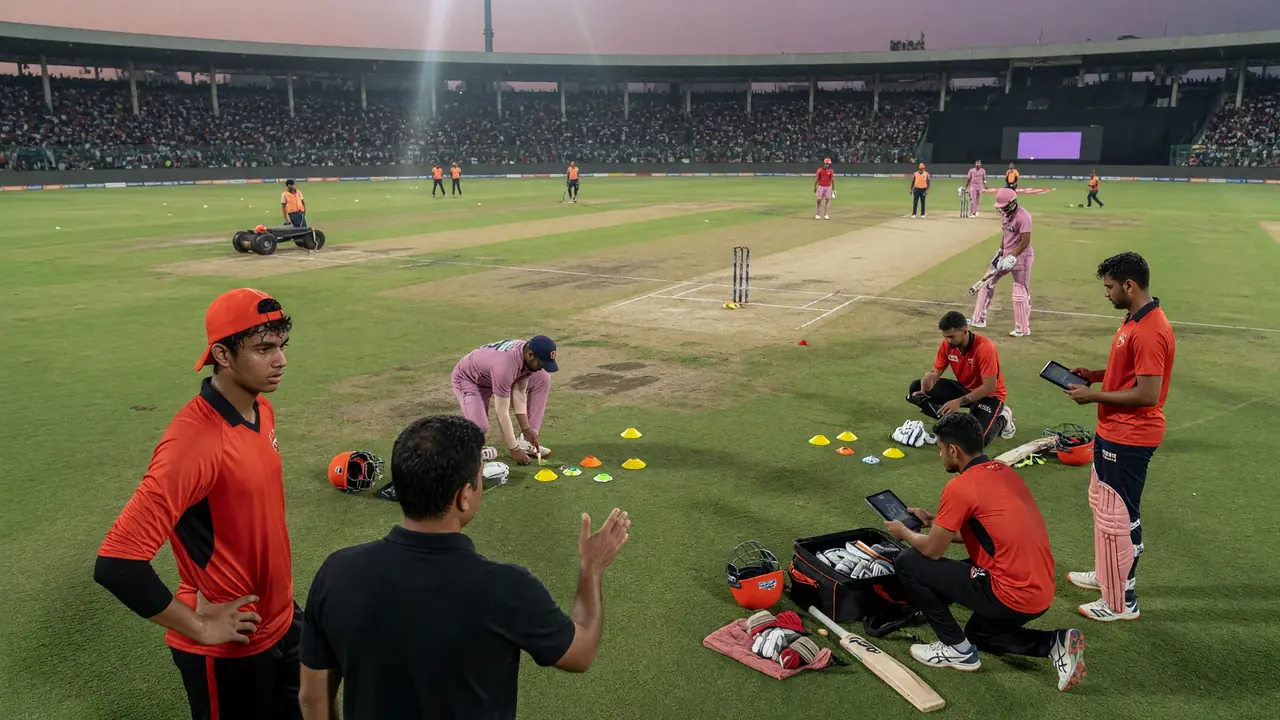
A practical worksheet from the May 26 sheet would have looked simple. SRH core: Abhishek Sharma, Travis Head, Ishan Kishan, Heinrich Klaasen, Nitish Kumar Reddy, Pat Cummins, with Harshal Patel on the Impact radar. RR core: Yashasvi Jaiswal, Vaibhav Sooryavanshi, Dhruv Jurel, Riyan Parag, plus Jadeja if his bowling load was confirmed closer to toss. Everything else was filler until later team sheets arrived. The point of the exercise is discipline. Knockout fantasy fails most often when managers expand the pool too early and dilute salary that should have stayed inside the locked roles.
Cummins as captain-bowler is the clearest teaching example. In league phases, captains who bowl four overs are sometimes faded because batting ceiling looks prettier on highlight packages. In an Eliminator at a ground averaging above nine an over, those four overs become scarcity. Wickets plus economy against a top order that includes Jaiswal and Sooryavanshi are not consolation points. They are the primary path. The same logic applied, on the other side, to whoever RR planned to throw at Head and Abhishek in the powerplay.
Nitish Kumar Reddy sits in a different teaching bucket: the seam-bowling all-rounder who can absorb a lower ownership share because casual teams undervalue part-time overs on batting-friendly nights. When the venue table already says 181 is routine, all-rounders with even two or three overs can separate mid-table lineups. Reddy’s value in the predicted SRH XI was never only his batting slot. It was the dual ledger.
Totals markets and the fantasy mirror they create
The preview’s recommended betting angle was both teams to score over 180, priced at 1.36. Fantasy managers are not bettors by default, but totals markets are still useful mirrors. A market that expects both sides above 180 is effectively saying the night should pay top-order ceiling and keep chase packages alive. That supports stacking a primary team’s top three rather than spreading thin across bowlers from both sides in equal weight. It also warns against overpaying pure accumulators who need long middle-overs occupations when the scoring rate is already north of nine.
None of that required agreeing with the SRH win pick. The totals frame and the venue frame can be accepted even when the match-winner lean is left open. Course teaching should separate those layers. Layer one: environment. Layer two: roles. Layer three: side selection. The May preview supplied all three with unusual clarity, which is why it still works as a classroom artifact after the season moved on.
A knockout checklist distilled from the May 26 brief
First, write the venue averages before you open the player list. Here that meant 181.00, 9.31 an over, a 254 top score and a 223 successful chase. Second, lock the opening pairs and wicketkeepers named in the predicted XIs before you chase fringe names. Third, mark every injury that still carries an “expected to play” tag, because role risk is not the same as omission risk. Fourth, note the tournament path: Eliminator winner into the loser of Qualifier 1, final staged in Ahmedabad. Path notes do not change one-match scoring, but they explain why teams avoid experimental XIs and why projected sides are more trustworthy than they are in week five of the league.
Fifth, compare public narrative with ownership opportunity. SRH’s 14–9 head-to-head edge and five-match winning run against RR were real facts in the preview. They also created the exact conditions in which RR’s explosive openers could be under-owned relative to their ceiling. Sixth, keep Impact Player lanes visible. Harshal Patel’s likely Impact tag on a fit SRH bench was a concrete bowling stream that many cash-team builds ignore until the toss graphic appears.
Seventh, refuse to invent later information. The May 26 preview did not publish a full twelve-name confirmed sheet for every bench role, did not list final over allocations, and did not record the match result because it was written before the first ball. A responsible retrospective stops where the source stops. The lesson is transferable precisely because the inputs are bounded.
What still transfers to later knockout nights
The durable transfer is not “always back SRH” or “always fade a first-time Eliminator opener.” The durable transfer is the order of operations. Venue board first. Predicted XI second. Injury role risk third. Market totals as a mirror fourth. Only then side lean and captain ranking. Managers who reverse that order end up arguing about favourite narratives while the salary sheet is already wrong.
Sooryavanshi’s first Eliminator remains the cleanest character in the story for teaching volatility. The role was opening. The partner was Jaiswal. The ground was scoring freely. The occasion was new. Those four facts can coexist without forcing a binary play-or-fade slogan. Good fantasy process prices the distribution: high ceiling, high variance, likely soft ownership. That is a different decision from omitting him because knockout nights supposedly belong only to veterans.
Cummins and the SRH top three teach the opposite end of the same spectrum: high floor of role certainty plus high ceiling of matchup. When a preview simultaneously gives you a destructive top three and a captain who will bowl through the night, the default cash build should not wander far. Differentials then come from the other opener pair, the Impact seam option, or the injury-managed all-rounder whose bowling load needs a final check.
Limits of the source and the honest edge of the lesson
Because this is a retrospective on a preview, several things remain outside the factual ceiling. The May article did not settle the toss. It did not confirm final over splits for Parag or Jadeja. It did not publish a ball-by-ball pitch report beyond the season table for Mullanpur. It offered a winner lean and a totals lean, not a scored result. Any course that turns those gaps into pretended certainty is no longer teaching from the source.
The honest edge is still wide enough. Between the venue table, the two predicted XIs, the injury tags, the head-to-head ledger, the broadcast window and the playoff path, a manager had everything required to build a disciplined Eliminator lineup on the evening of 26 May 2026. That is the standard later knockout previews should be measured against. If a brief cannot supply venue math, likely XIs and role risk in plain language, it is not yet ready for fantasy use.
For readers working through structured fantasy study, the SRH–RR Eliminator preview earns its keep as a filed example rather than as breaking news. Keep the date visible. Keep the tense in the past. Keep the checklist. The next time a northern venue posts first-innings means near 180 and a young opener is cleared for a first knockout start opposite a streaking rival top three, the May 26 page is still the right template to reopen.