Moondra, McDonough, Calitz called up as Wilson names first Ireland ODI squad for Afghanistan series
Pace bowlers Jai Moondra and Byron McDonough, alongside middle-order batter Ben Calitz, earn first ODI selection as Ireland head coach Gary Wilson names a 14-player squad for the five-match Afghanistan series beginning 5 August at Bready.
Published July 28, 2026 · By Fantasy Cricket Prime Newsroom · Source: the42.ie

Bready: Gary Wilson has picked three new faces and left out six of the players who would have walked into most projected Ireland XIs, in his first ODI squad announcement since taking over as head coach. The fourteen-man group named on Tuesday morning will take on Afghanistan in a five-match series that begins at Bready on 5 August and finishes at Stormont on 15 August, with two ODIs at each venue and one extra at Stormont.
Pace bowlers Jai Moondra and Byron McDonough, both uncapped in ODI cricket, and middle-order batter Ben Calitz, who has played T20 internationals but not fifty-over cricket, are the three names missing from any earlier Ireland ODI squad sheet. The squad will be reviewed after the third ODI, with the management reserving the right to make changes before the back end of the series at Stormont.
Why these three, in the selectors' own words
National selector Andrew White, speaking after the announcement, framed the new bowling inclusions as a question of contrast rather than redundancy. "Jai and Byron bring different attributes," White said. "Jai has shown the kind of pace and accuracy that has earned him a chance after the India T20s, and Byron has been the most consistent seamer in domestic fifty-over cricket this summer. We wanted options, not duplicates."
On Calitz, who slots into the middle-to-lower order, White was more direct. "Calitz offers a powerful and dynamic approach," he said. "He has the ability to change the momentum of a game in two or three overs, which is exactly the kind of option we have been asking for in that phase of the innings against sides who can keep the scoreboard moving in the back ten."
A familiar batting core, a reworked bowling unit
The batting group is essentially the one that has held Ireland's ODI shape together over the past eighteen months. Paul Stirling captains and opens, with the middle order built around Harry Tector at three, Andrew Balbirnie at four and Lorcan Tucker keeping wicket and batting in the middle phase. Curtis Campher and Cade Carmichael provide the seam-bowling all-rounders who also lengthen the batting. Liam McCarthy is listed as a fast-bowling all-rounder.
What has changed is what surrounds that core. With six senior players unavailable, the depth chart in both the pace attack and the lower middle order has been forced to look further down the pathway than Wilson might have liked in his first window. Moondra's selection is the headline; Carmichael's continued presence is the quiet story. Both are evidence that the pathway has produced players the management is willing to trust in five-match series cricket against a side ranked inside the ODI top ten.
The six who are not available
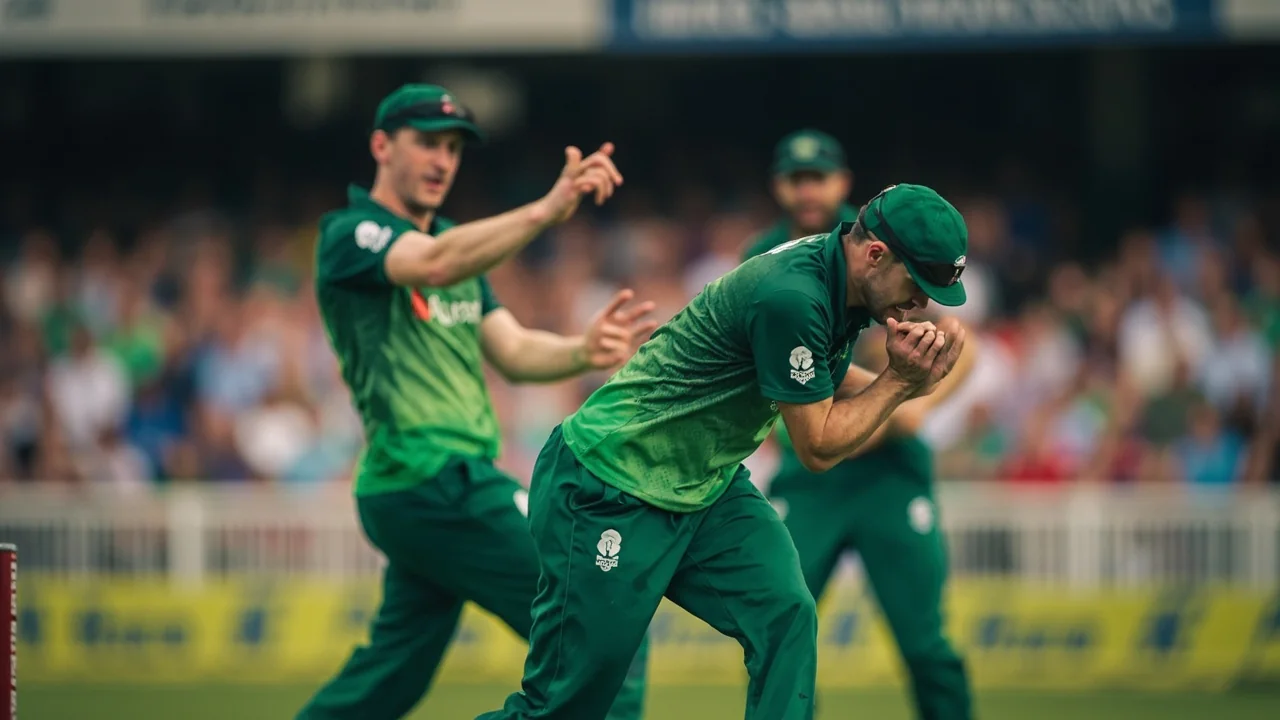
The size of Wilson's first selection is best measured by who is missing. Josh Little, Matt Hollard, Craig Young, Barry McCarthy, Jordan Neill and David Delany are all unavailable, either through injury or because they remain on return-to-play protocols after recent workloads. Little's absence is the most conspicuous, given his role at the top of Ireland's white-ball powerplay, but the management has been at pains to present the squad as a positive story rather than a triage list.
The composition of the attack reflects that. Moondra and McDonough join Mark Adair, George Dockrell, Andrew McBrine and Liam McCarthy in the bowling group, with Liam McCarthy the seam-bowling all-rounder and McBrine the senior off-spin option. Gavin Hoey, listed as a leg-spinning option, gives the side a second wrist-spinner alongside the ambidextrous spell White singled out when explaining the middle-overs thinking.
Hoey's ambidextrous spin and the middle-overs question
White's most pointed observation during the announcement was about Hoey, who can bowl right-arm off-spin to right-handers and left-arm orthodox to left-handers, removing the conventional match-up advantage a batting side might plan for in the middle phase. "Having two wrist-spinners who can both turn the ball into the right-hander and away from the left-hander is a wicket-taking middle-overs threat," White said. "Gavin gives us that option."
That is the tactical frame around which the squad has been picked. Afghanistan's batting order leans heavily on right-handed top-order stroke-makers who take on pace and trust their feet against spin. McBrine and Hoey, used in tandem rather than rotation, are designed to put pressure on that pattern from overs eleven to thirty-five, the phase where the series is most likely to be settled.
The fourteen: Paul Stirling (c), Mark Adair, Andrew Balbirnie, Ben Calitz, Curtis Campher, Cade Carmichael, George Dockrell, Gavin Hoey, Andrew McBrine, Liam McCarthy, Byron McDonough, Jai Moondra, Harry Tector, Lorcan Tucker.
The fixture list and what the early window tells us
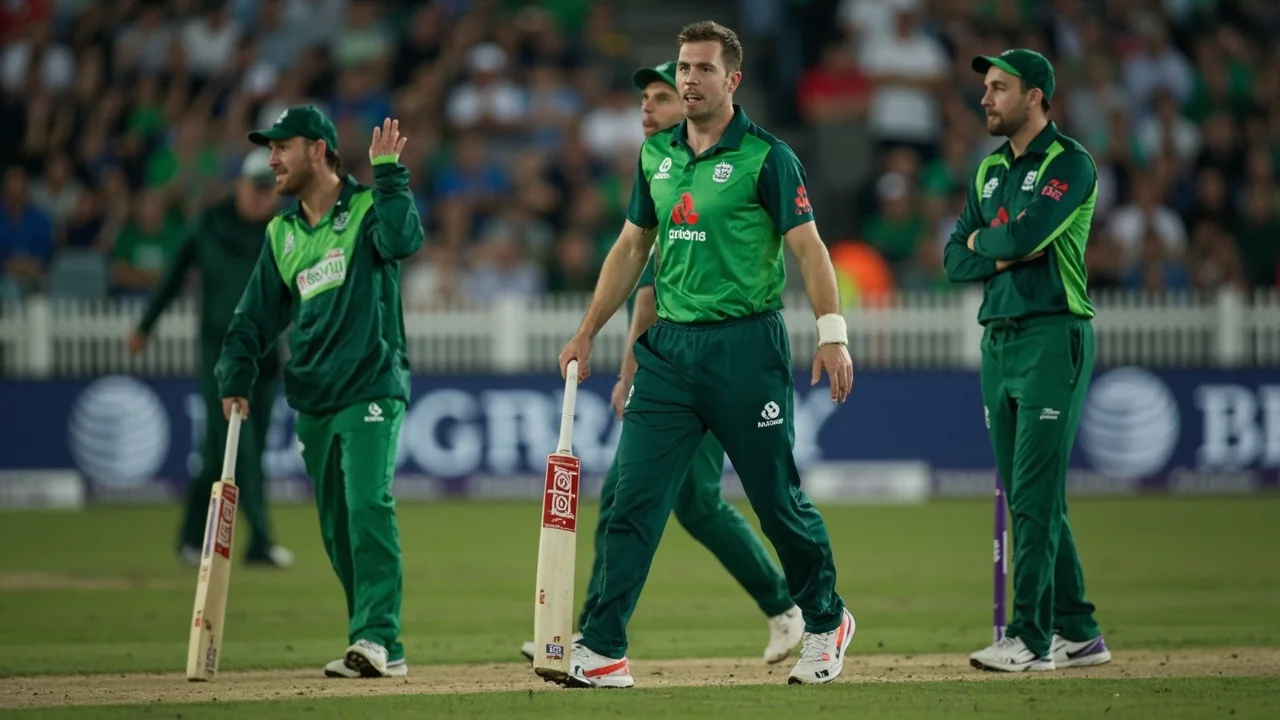
Bready hosts the first two ODIs on 5 August and 7 August, both starting at 10.45am. Stormont takes the next three on 10 August, 12 August and 15 August, again at the same time. The decision to begin in the north-west is partly logistical, partly cricket. Bready's surface has historically offered enough in the early overs to reward the new-ball pair, and the morning start gives the spinners a drier ball to work with through the second half of the innings.
The squad will be reassessed after the third ODI. That gives Wilson and White three matches to test combinations before committing to the back end of the series. A debut for Moondra or McDonough in match one would not be a surprise; a debut for Calitz depends on how Ireland read the middle-overs phase against an Afghanistan side that has historically been happier chasing than setting in away conditions.
What fantasy players should take from the announcement
For readers tracking the news desk for touring-cricket squad moves, the headline is the two new fast-bowling options. Both Moondra and McDonough are pace operators, both are likely to be used in the powerplay, and both carry wicket-taking upside that the older incumbents have not always delivered on slower surfaces. In head-to-head fantasy formats that reward new-ball wickets, both deserve a place in the watchlist for the opening fixtures at Bready.
Calitz is the more interesting differential pick. His T20I strike rate against both pace and spin is what the selectors are buying, and the Stormont leg of the series, with flatter batting conditions, is where he is most likely to get his chance. Fantasy captains who have already locked in the obvious picks should be weighing whether a Calitz call at six or seven, batting around the Campher–Tector middle order, returns more than the safer, more familiar names.
The wider frame: a new coaching era begins with selection intent
Wilson has not framed his first ODI selection as a clean break from what came before. He has framed it as a continuation of the same squad-build that the previous management was running, with three specific additions that he believes change the kind of questions the side can ask of an opposition in fifty-over cricket. The presence of six unavailable senior players makes that brief easier to defend; the harder argument is what happens when those players return.
Hoey's ambidextrous spin is the selection that most clearly carries Wilson's fingerprint. McBrine has been a fixture of Ireland's middle overs for several seasons, but the option of a second wrist-spinner who can bowl either way is new, and it is the option White chose to highlight when he was asked what the squad would look like in the field. That is not an accident.
What to watch over the next ten days
Three things will tell us most of what we need to know. First, who takes the new ball at Bready on 5 August: if it is Moondra and Adair, the selectors have decided the powerplay needs pace above all else. Second, how Hoey is used in the middle overs: a four-over block from overs sixteen to twenty would signal that the management wants to test the ambidextrous option against right-handers before the series goes on. Third, where Calitz bats, if he plays: slotting him at six suggests trust; holding him back at eight suggests he is being kept in reserve for short-burst impact rather than a long innings.
The squad will be reassessed after the third ODI on 12 August. By the time the Stormont crowd walks in for the fourth match on 15 August, the management will have answers to at least some of those questions, and the rest of the squad cycle into the autumn will be shaped by what those answers look like.
For now, the clearest reading of the selection is the one the selectors offered themselves: three new faces who bring different attributes, a middle-overs plan built around Hoey's unusual skill set, and a fixture list that gives the management three matches to learn what works before the series closes out at Stormont.
How the squad arrived at this point
Moondra's path into the squad is the more visible of the three stories. He was already a senior T20 international by the end of Ireland's recent series wins against India, and his performance in those fixtures was the kind of spell that turns a development-pathway bowler into a senior contender in a single window. McDonough's route has been quieter but no less persuasive: his role in Leinster Lightning's Inter-Provincial 50-over Cup win was the standout contribution by a fast bowler in domestic cricket this summer, and the selectors have rewarded that with a senior debut at 24.
Calitz's selection closes a loop that has been open since his T20I debut. He has the middle-overs batting profile the selectors have been hunting for: a right-handed power hitter who can target both pace and spin, comfortable coming in at the fall of an early wicket, and capable of turning an over of tight spin into a boundary opportunity without taking an undue risk against the slower bowlers. The ODI format, with its longer middle phase, is a different shape to the T20 game he has played so far. The selectors are betting that the difference is one of rhythm rather than skill.
A note on the venue rotation
Two ODIs at Bready, three at Stormont, both morning starts. The split is more than geography. Bready has a smaller capacity and a tighter square, conditions that generally favour the bowlers through the first ten overs and reward a side that can build pressure rather than chase a big total. Stormont's strip has historically been flatter, with the afternoon breeze offering more to the batters in the second half of the innings. Ireland's choice to begin in the north-west is, in effect, a choice to begin where their new-ball bowlers are most likely to dictate terms, and to finish where their middle-order depth is most likely to matter.
The reassessment after the third ODI will arrive at Stormont, in conditions where Afghanistan's batting is most likely to fire. If the series is level at that point, the selectors have to choose between continuity and a fourth-match reshuffle. Either call is defensible; the more interesting question is which combination the new faces have earned by then.